
August 10, 11, and 12
We got our tickets, you should get yours at:
www.summermeltdown.com


Lately or
Spring in California
Lately I've been busy. Busy working. But it's not work at the monotonous grindstone that sucks the life from you. It's constant work, outdoors, in the wind and rain, with students and friends, in some of the most beautiful places California has to offer. It is 7 days a week. It involves big weekend drives (or boat rides). We are often tired, muddy, cold, up too early, sore, sleepy, eyes full of sand, dehydrated, numb, annoyed – I love it.
Weeks go by quickly. Outdoors constantly, we move at a different speed. No faster, nor slower, but different.

Naturalists At Large has become a comfortable home throughout the entirety of California. Already this season we have braved the harsh spring elements and floated the lower Colorado, explored the empty beaches of Catalina, and relaxed under Joshua Tree starry nights. Needless to say I have stayed far away from the trappings of the computerized world and the blog-o-sphere of the 21st century has seemed so distant and insignificant.

Photos: Checking the weather radio for winds; Taylor Lake, Lower Colorado River.
Michelle sneaking in a well-deserved break; Catalina Island.
Band practice N.A.L. Style; Pinnacles National Monument.


 The next day we followed a recoomendation in the Thailand Rough Guide (a rarity) and went to find the Cave Lodge, rumored to have fresh baked goods and helpful maps of the limestone region in which we roamed. The Cave Lodge, while not overly-friendly, did indeed make up a decent western breakfast and had many poster board signs mapping out the regions many adventures. The staff their served as guides for the area's internationally acclaimed caves - the Australlian owner had been involved in many university sponsored research projects that had mapped 1000s of archelogical sites and worked to put Northern Thailand on the map in terms of noteworthy karst topography. We weren't about to pay $20 for a short kayak trip through an underground cave, so we talked them out of a hand-drawn mapped and pointed the Suzuki for a small forest road that may lead us to the outlet of a huge underground river.
 After just a few kilometers down the very rough mud track we came to a gate, through big enough for a car we decided to park in the bushes and jump the fence. We aimed down through big cows with horns and came across a river and dam that was indicated on our photocopied map. We committed to the shallow river corrdior (it is the dry season here and the river was running slow with many sandbars) and began to work our way upstream towards what we hoped would be a large cave. Along the river we saw colorful birds unlike anything before and the water was clear and cool (also abnormal). We turned many bends and began to be enclosed on both sides by limestones walls. Thousands of swifts darted overhead. Both good signs that a cave was nearby. Sure enough around the next corner was a gapping hole about 200 feet high, the river and the swifts poured from its mouth. We entered the edge of the cave on a sandbar. The smell was pungent and intense as we dodged bird bombs. Our plan was to continue up river, up to our knees if nessecary once entering the cave. A very old and thin Thai man tended what looked to a broken raft at the entrace, seemingly not noticing the otherworldy number of birds about him. There was a man-made dam were the river met the light of day backing up the water, we entered the water but our small LED headlamps penetrated very little into the darkness. The water deepened as did the dark. We turned back.
 Again at the caves mouth we found the Thai man now loading two tourists onto his raft. We agreed on a price though we did not know how he would paddle or pole us up the river. Once loaded another Thai lady came with lantern, the thin old man grabbed a rope and start pulling the entire boat upstream into the darkness. We immediatly both felt bad about the work he was doing for us, and relaized our mistake, for the river agained turned shallow just after our point of turning back. The current strengthen and the Thai lady began to push as well. We looked at each other decided whether it would be more rude to get off and walk next to the boat or just let them work for us as agreed. Through the cave was nothing short of amazing, huge caverns off to the left and right. More tourist rafts came and past, lighting the entire massive cavern. We approach the daylit entrace of the cave and I couldn't stand being pulled anymore so I hoped off the raft to walk - the Thai's seemed very perplexed but said nothing. At the cave entrance, we were welcomed by other That guides that wanted to take us back through the cave with better lights. It seemed required, but somehow with snuck off back into the dark waters to explore by ourselves the massive side caverns with classic cave formations and rickety bamboo ladders. We found our way back to the Suzuki and went straight back to Sappong for a couple of Thai noodle bowls.
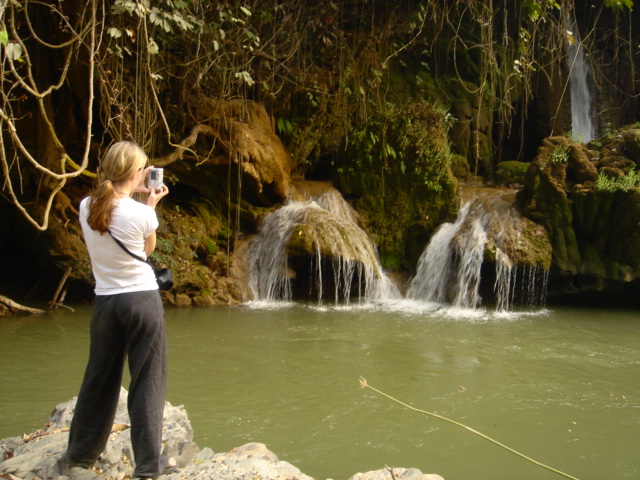
 The afternoon was still young so we headed out of town of another 4WD rode that was signed to Suza Waterfall, after 5 stream crossings and 14km of following what can only be described as a wilderness river we came to an impressive waterfall series pouring from a limestone jungle delta into the river. After another lonely and tourist-less hike we retraced our rough road under darkening skies and made to the tourist trap town of Pai again in the dark. We located a cheap but rustic bamboo hut and took to the streets to people watch the many many western and Thai tourists. We met some new friends from Slovenia and assured them that travelling in the US would not be like the Chainsaw Massacre. It was a good end to a very long two days.
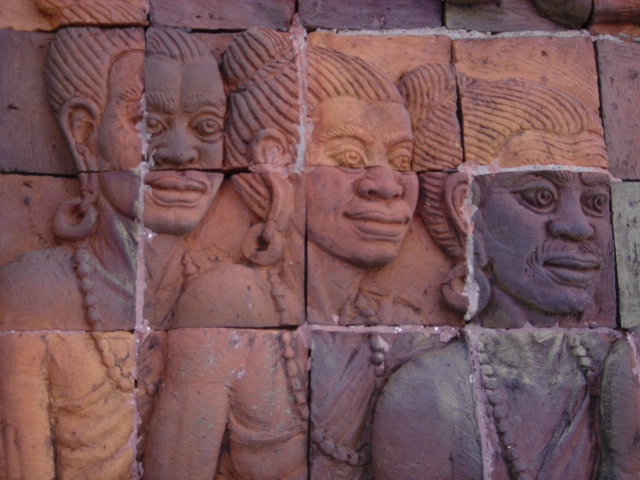
 At a dusty intersection at a mountain pass we pulled into a village with a small handful of what I think were Hmong villagers. The Hmong are mountain people that have immigrated from Burma, they are firmly holding onto their culture as the 21st century decends upon them. They are animists (worship and give thanks to many 'natural' gods), dress in traditional colorful costume, and are known for thier skill in farming both opium and hemp. Just ten years ago visting this region would have been much more precarious, for these Burmese border villages were second only to Afganistan in opium (the raw ingredients for herion) production. Agressive efforts by the Thai governments, and especiallly the Thai royal family, have helped these tribes to trade poppy farms for cold vegetable crops such and cabbage, onions, and cut flowers. In turn the stilted homes of the Hmong are now adorned with satelites and solar panels - the streets in the villages are generally paved. Officially, poppy fields are gone and opium production is now "negligiable." It has been hard for us to determine whether the new crops equal the income of an expensive drug crop and how the villages are faring after a disjunct drug war/rehabiltation program that has spanned many erratic Thai central governments. English information on these subjects is, naturally, hard to come by. When we pulled into Mae Noi we could do little more than communicate the direction of our next mapped destination. Some villagers gave slight smiles, though others offered more baffled looks, as they tended their pigs and many small children. The women were generally more friendly and returned our waves - the children most always smiled and waved and sometimes ran alongside the jeep.
 The road from the village was tracked with hooves, feet, and motorbikes. Our jeep left the only 4-wheeled tracks in the thick dust. We decended grades of atleast 20-25% through cabbage and other small agriculture plots. It only thing I can compare it to was maybe driving in snow, where too much braking only rendered your front tires useles for steering so it became an uncomfortable balance of sliding without direction and gaining speed while steering. There was no way we would be able to climb this loose road to return the way we came. Decent was the only option. More small stilted homes appeared, rice paddys hinted that we had dropped over 1500 meters in elevation. Signs in Thai indicated more villages may be ahead, our map was vague but encouraging. We passed a single wooden and bamboo house with a rusted Toyota truck (a good sign) and then crossed a small wooden bridge to a graded road. We weaved through dense mixed-race villages to the town of Mae Chaem. We filled our empty stomachs and gas tank, used our map to locate a clean, friendly and cheap hotel ($8), and settled in along a small river at the edge of town.
 The Mae Hong Song province of Northern Thailand is a jumble of folded mountain ranges that marks the true terminus of the Himilayan range. The hills our covered with decidious jungle species in the low elevations and evergreen species remniscent of Olympic National Park at high elevations. In between (in whats called an ecotone) many environs come together to host a outrageous diversity of birds and mixes familiar species with those of unfamilar jungle (i.e. pines live side by side with philodendrons and climbing orchids). The largest National Park in Thialand (boasting Thaialnd's highest point) is here, the Burmese border paralells the highway often, a handful of native and refugee hill-tribe people reside here (some in inaccessable primitive villages), there are wilderness rivers, an incredible limestone (karst) region with internationally impressive caves, rough Thai towns and friendly westernized towns, and endless unmapped rough roads perfect for our underpowered but capable rental 4WD.
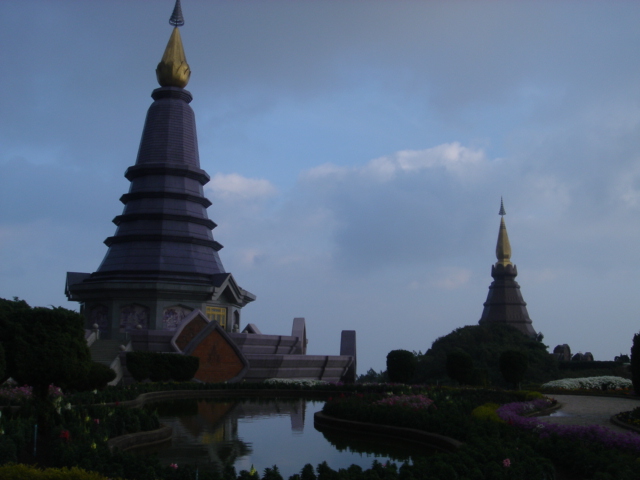
 The plan for our weeklong trip was simple: buy a good map (we used a GPS-based map for western motorcyclers), see Doi Inthanon National Park, go places without tourists, get the jeep dirty, check out some hill-tribe viallges, and don't get stuck! The first day we made the short trip down the maintained highway from Chaing Mai to the entrace of massive Doi Inthanon. We planned only one National Park visit since on January 1 the entrace fee increased from 200 to 400 baht. The entrace fee for Thais remains 40 baht. I have spent enough hours ranting about this blatant and twisted two-tierd pricing that is used by the Thai government, but will spare you all with most of barrage that Michelle had endured (but, just imagine for one second the U.S. Parks started charging different prices for different nationalities- a very slippery slope).
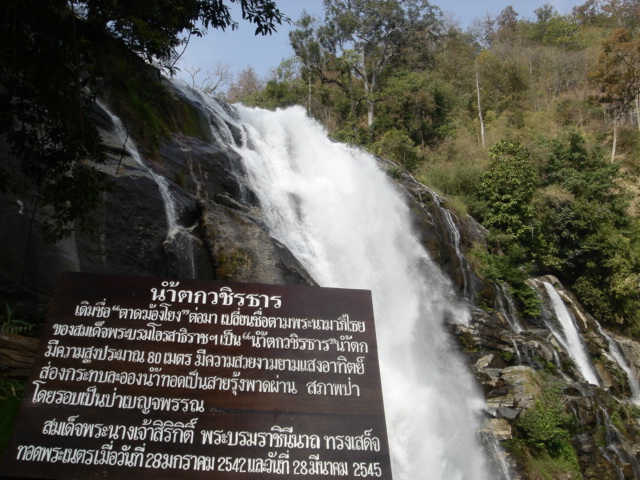
 We followed tourist signs and saw impressive waterfalls ringed by diverse jungle. That night we rented a cheap tent and sleeping bags and spent our coldest night in Thailand huddled around a charchol fire at 2000 meters in the park's only campground. It was a quiet night, and we were reminded of how accustomed to down feather and inflatable mats and the comforts of camping we had become. Even though we spend maybe half the year outdoors somehow sleeping under the Thai stars felt new and exciting.
 Also above 2500 meters in Inthanon are two worthwhile nature trails. The first is a short boardwalk at the highest point in Thailand. It weaves through evergreen forests with ferns and vines and endemic epiphytes (air plants) and song birds. We walked along the interpretive path feeling quite at home in the damp temperate rainforest. The second nature trail is 4kms and even though we tried to walk it by ourselves we were motioned over to a small booth were a local Thai explained we would need a guide. We agreed to pay and left with a friendly Thai named Egk who pointed out in simple English mushrooms and orchids and other photgenic plants. The trail was quite impressive touring through jungle, and then savanah, then a forest of endemic (native only to this region of Thailand) tree-sized rhododenrons, and then riparian jungle with blueberries and amazing Sunbirds (also endemic). All the while We looked steeply over broken limestone crags into the deep canyons and ravines pouring from Thailand's highest summit.

Keeping Busy: Thai Style
A week seemed to go quickly by in Chiang Mai this January. Though it is January, and most likely wintery in your neck of the woods here in
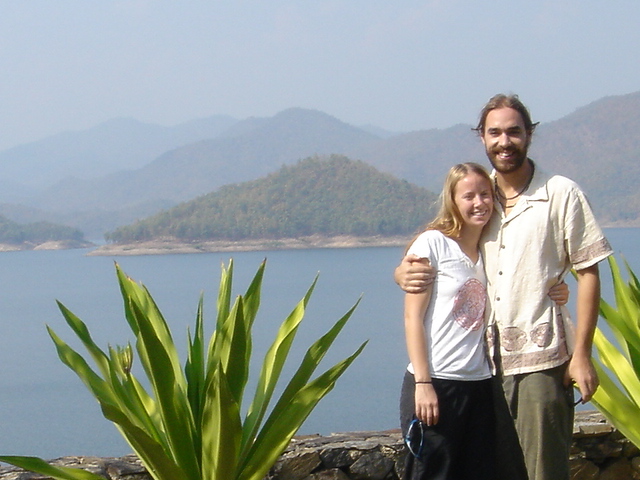
 We have fully embraced the 125cc motorbike – as nearly the entire Thai population has - as the perfect tool for exploring small rural villages, endless craft fairs, winding forest roads, and smoggy, clogged city streets. In just a handful of days we have covered many kilometers of Thai side roads and been thoroughly amazed with the continued diversity of this country. We climbed through hilly broken concrete roads, unable to read each and every sign in Thai script, and were rewarded with views over the entire valley from perched atop a massive earthen dam. The dam formed a large reservoir, reminiscent of the manmade lakes the dot the
For one thing, on this weekday, we were nearly the only one enjoying the ‘recreation area.’ No motor boats humming across this lake, only silent smoke rising from the valley below as rice farmers burned their fields and ditches. The air is always noticeably thick in
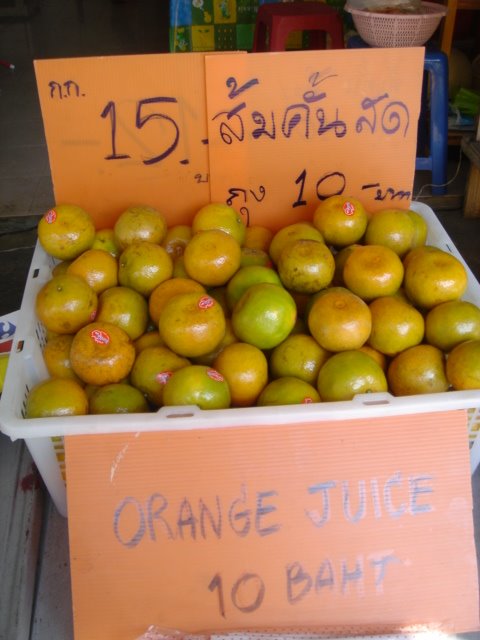
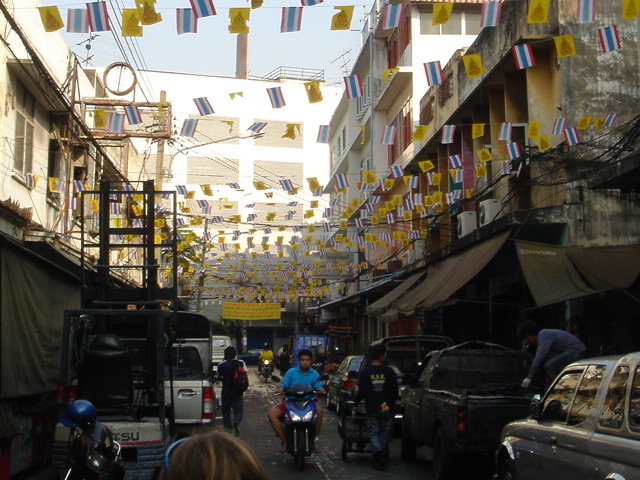
 Back in Chiang Mai we find ourselves indulging in the options of the Thai city. Fresh orange juice for 50 cents, endless bizarres and markets selling so many things we’ve never seen before, constant temptations of ‘nearly free’ pirated software and movies, street food with unknown names, malls with Western familiarities priced in baht, and colorful Thais smiling, and working, and casually keeping busy. On the weekends the night bizarre comes to us and vendors move onto the plaza just outside our door. Stalls – most attached precariously to a motorbike – sell strawberry shakes, pork skewers, sticky rice, vats of curries, and parts of fish we’ve not yet ventured to eat.
In narrow alleys between the food vendors are jewelry vendors and hill-tribe peoples, shop owners and home-craftmans, each tucked under an umbrella and a single bare lightbulb patiently organizing their wares to attract Western tourists and Thais alike. Again, these affairs have the air of being both casual and bustling – it is a line the Thais have learned to walk well. We also continue our casual pace, heading out tomorrow in a rented Suzuki jeep for an larger adventure to the northwestern hills. We’ve embraced the modus operandi of our host country: keeping busy though sometimes it doesn’t look like it.

 Chiang Mai is nothing short of amazing and beautiful. The bus system is nothing more than a bunch of trucks with seats in the back picking up anyone that waves them down. They are called share-taxis, but in the Thai the literal translation in two-rows (since you sit in two facing rows in the back of a pick-up) and the fare is always fixed. It's a solution to public transportation that seems both brilliant and haphazard. Add in many handfuls of three-wheeled tuk-tuk taxis that'll get you anywhere twice as fast for twice as much and you have an incredibly accessiable city. Everything seems nearby, and there is indeed always something to see right around the corner.
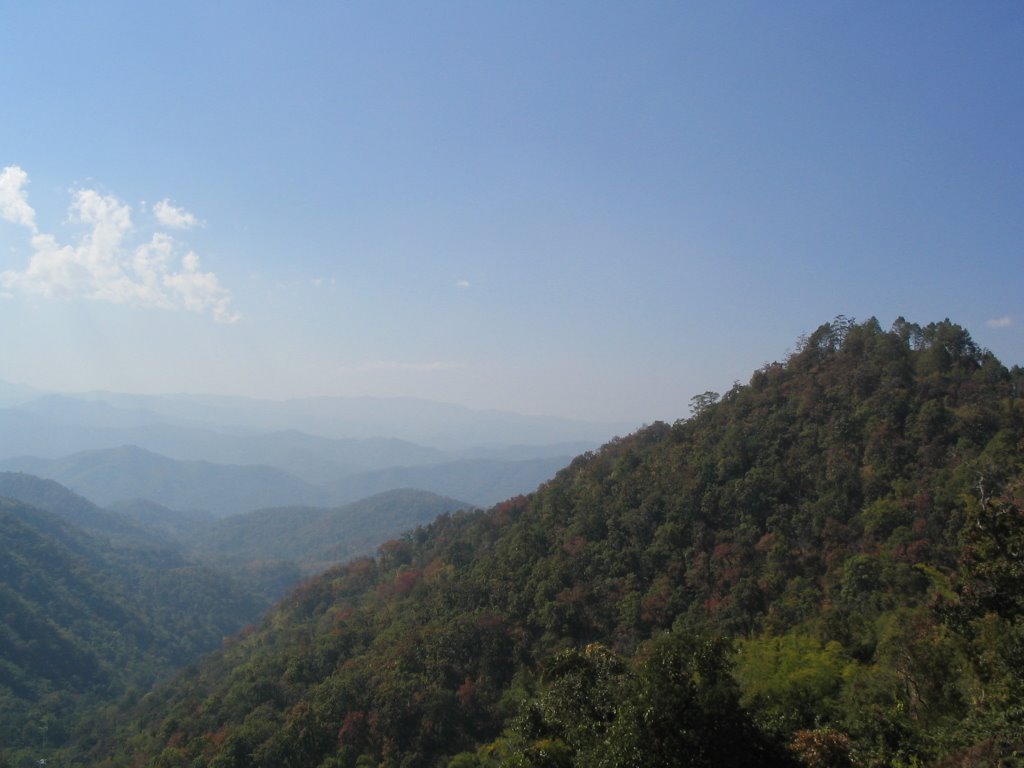
 Of course, our third common transportation, and by far our favorite, is the 100cc motorbike. For next to nothing you can rent one of these babies for the day and explore the smogless, cooler countryside of the north. On our last journey we were amazed at the views and rugged topography as we climbed through the windy hills. This is the land where the jungle meets the pines and just over the next hills are the mystical and rough-and-tumble regions of the Burmese and Loa borders. In these hills many native 'hill-tribes' still exists in reportedly 'primitives' villages. Maybe you've seen the long-necked Karen women in an old national geographic - visiting the Karen is likened to a 'human zoo' by Lonely Planet so we don't plan on making that trip - but you get the point, these are isolated native peoples with interesting and one-of-a-kind cultural heritage.
 Tonsai - Moving fast (for Thai time)
 The constant hum of generator mixes with the drone of unmuffled longtail engines. The limestine towers serve only to reverberant the sounds of transportation and electricity. Plumbing is a maze of pipes crisscrossing the streets and paths, freshwater barrells sit open on hillsides, the garbage pile just off our porch grows daily, otherwise we are woken by the smell of burning plastic. Talking with the early climbers in Tonsai one can easily imagine how much this place has changed in just maybe 10 years. Climbing brought people to Tonsai, but no longer do they make up the bulk of the tourist load. Everyone enjoys the warm sea water and outstanding beauty, climbing helped Tonsai rival neighboring and swanky Railey.
 We were, no one is, exempt in impacting Tonsai. Wee told me 12 years ago he swam in a fresh water pool at the base on Tonsai crag. Since then the freshwater has be diverted and the pool built over with the freedom bar. He's Thai and, alongside many American climbers developing the routes here, built tonsai into a world-recognized climbing destination. I am (just as every other visiting tourist climber is) indebted and thankful of these climbers that put this place on the map, yet I am cautious just how many maps to tonsai there will be.
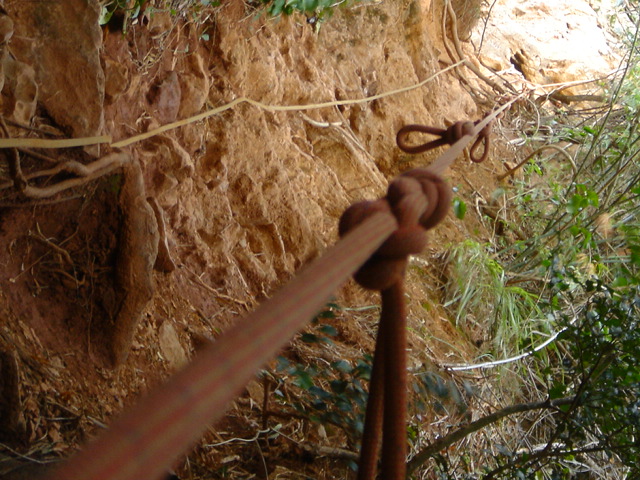
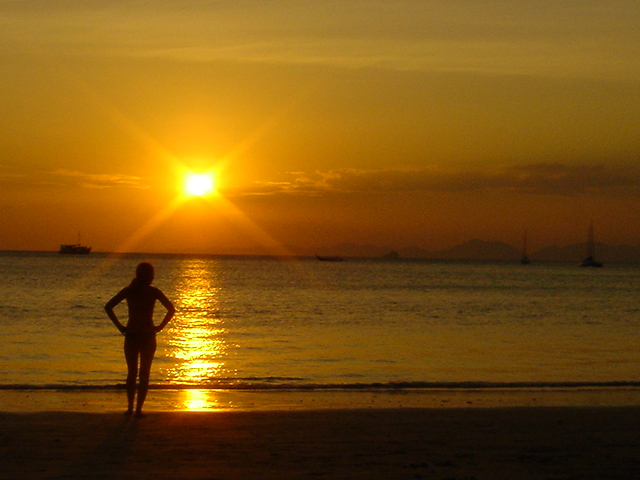
 Without a doubt, climbing an airy corner, steming in limetsone pockets and clipping titanium staples 1000 feet above the deep green Andaman sea is a special moment for any rock climber. Words can not describe the intensity of the steep, pocketed, and often exposed climbing here. It is challengeing yet friendly, melting hot but always sheltered from the rain, through jungle and up fixed ropes. Chasing lines of bolts up asthetic featured limestone in a beachside paradise is still that (no matter what): paradise.
 (B-1)
(B-1)
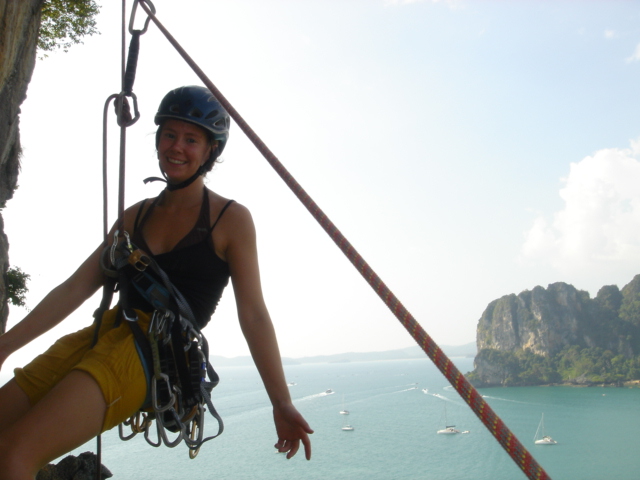

 Most climbers who have investiagted a trip to thailand know of the ongoing bolt problems here. Basically every kind of protection bolts used for rock climbing across the world fails here within a few years. Stainless stee, the obvious and standard choice for bolts worldwide breaks down abnormally fast thanks to a combination of intense sun, heat, salt water, and chemicals present in this particular limestone (some folks are saying chlorine gas, but I know too little of chemistry to understand the further complexities). What it comes down to is that anything that isn't new or rebolted is dangerous. For the last few years route builders here have been exploring many option for bolting and now all new bolts are titanium stables or bolts glue-in with super-epoxy - these work, but not without a cost.. Thousands of dollars have gone into equipping the routes here in tonsia, few passing tourists/ climbers recognize this. A few handful of devoted climbers put Tonsai on the climbing map, and many folks (including multinational development companies) are reaping the benefits.
 We have been lucky to meet a collection of these Tonsai climbers. Our neighbors, lucky for us, are retroboltng routes daily, and then passing the bolting information on in the evenings. The result: we climb routes that have been lost to obscurity for a few years that are now equiped with titanium bolts just days old - a treat. Add oustanding views, technical and steep climbing on sometimes sharp sometimes flawlessly smooth limestone, cave features, open jungle and ocean below, and you've got a recipe for outstanding rock climbing.
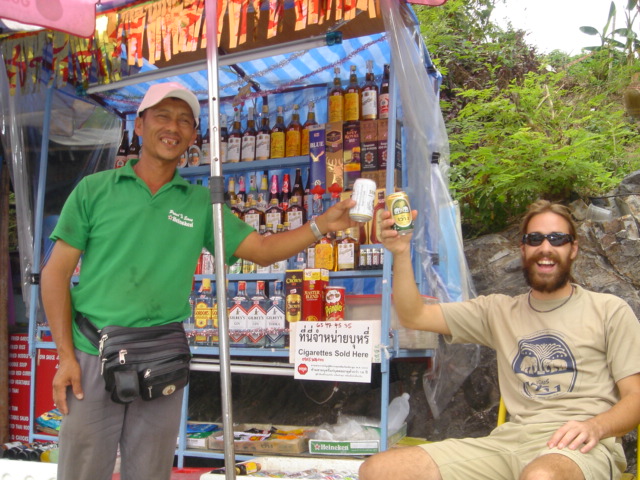
 The lands of thailand (formerly known as Siam) are diverse and mostly wild. We saw many waterfalls pouring over limestone cliffs and met many friendly locals, with which we could not converse with but who were nonetheless happy to drink ad eat with us and laugh. the kids here are especially interested in us,as they know basic English, are sometimes the most fun for us to hang out with. In Satun we stumbled across an amazing terranced waterfall liek a mix of Yellowstone and niagra and we jumped from cliffs and swam with many local kids while the dad's rolled us Thai cigarettes in their primitive bamboo papers. They feed us for what is less that a US dollar and we shared the beers we had bought.
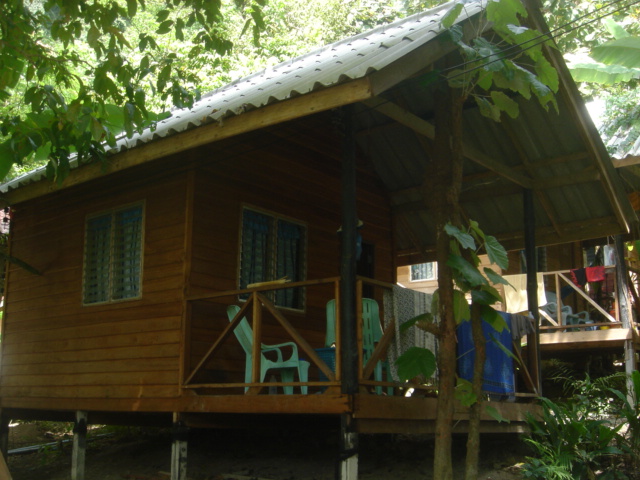
 Ao Nong feels welcoming and homely now we are back. This afternoon we will hop the usual longtail taxi back around the penninsula to Tonsai and hopefully move back in to our very comfortable stilted bungalor called Countryside. Tonsai is exciting to retuurn to though we now know how inflated theprices are there, after so much time psent in touristless Thailand. We keep reminding ourselves we are paying still so much less than anything comparable in the US and that beachside, climbing side paradise is a hot commodity where one may be in the world.


