My post graduation roadmapI start work tomorrow.
I have all of August to climb.
N.A.L. fall.
Just bought tickets to Thailand.
November 13th, LAX.
3 months in Asia with my girl.
Reflections and photos recording adventures in wild places
My post graduation roadmap
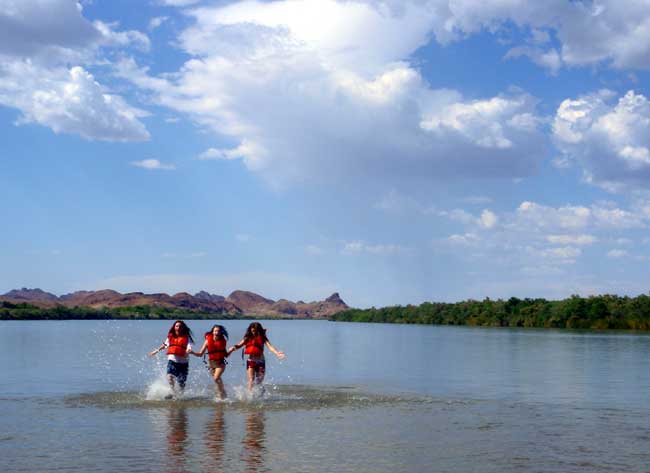
Time flies out on the river. The weeks have been whizzing by this May as I move quickly from one N.A.L. trip to another. I have learned about the intensity of real desert heat. I have waited hours,patiently, for the cooling of the sunset and the reward of endless stars. I have reaffirmed my love for working with students outdoors. I have had days that didn't feel like work at all - thanks to the amazing energy and skill of fellow Natties and the unmatchable flexibility of the N.A.L. work day.
I have enjoyed being constantly immersed in the Colorado River ecosystem. The river, 1450 miles long and draining large watersheds in 7 southwestern states, is, even in its very changed state, a mighty forceful component of this continent. It touches everyone's life who life in this region - whether they know it or not. Spending my weekends in Vegas I imagine the pipe that drinks from Lake Mead the water to fill the fountains and pools.
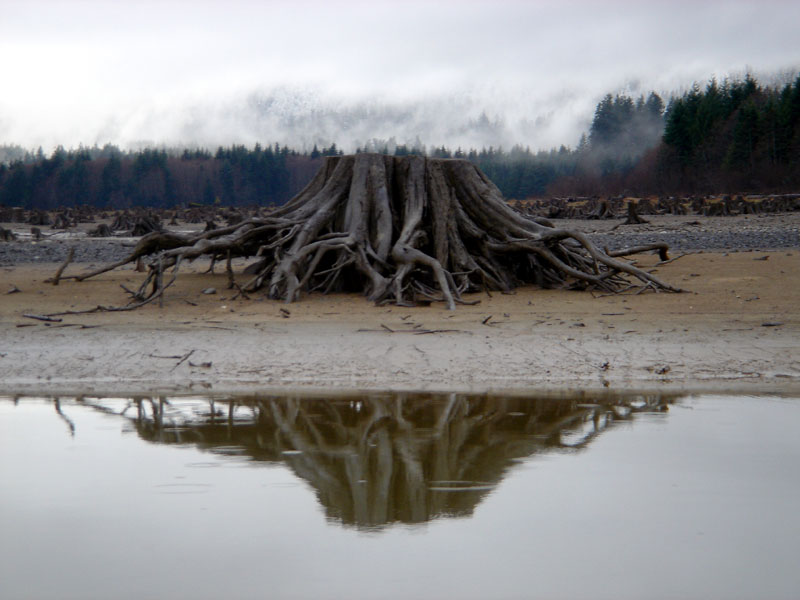
I have paddled many miles - always a dam above me and below me. The river has become lazy, the massive amounts of water lay waiting and evaporating. Each held back pool warms the water, then the dam releases the coldest and clearest of the lake from bottom reaches. In this fashion the water is a chain of warm lakes and cold rivers like non-other. You can imagine how much this differs from the pre-1936 river. Before the Hoover Dam the river was of course tumultuous, but also
very silty and warm. Its seasonal flooding recharged lowlands and maintained productive agriculture. Now-a-days, canals bring water out into the desert to water crops ranging from cotton to lettuce. These lands suffer from many ailments as they are depleted with nutrients and loaded with evaporated salts.
But don't let my digressions make you think the river is all lost. The new Colorado River has been good to me (and all of you) . It is now not only a manageable water resource, but a playground, and a classroom. And also a migratory bird route and a generator of comparatively greener power. The human impact on the Colorado River is lengthy discussion. The impact here is no different than across the globe. We humans use resources. For everything everyday. The Colorado River, when floating along between two mighty canyon walls peering through clear water into even deeper canyons below, seems infinite. It is not. It, like everything, can be used up.


The Life Continues....
First. Friends. It was bound to happen. My cell phone died. My ultra-handy-phonebook-of-friends was lost. Send me your number or better yet, give a call.
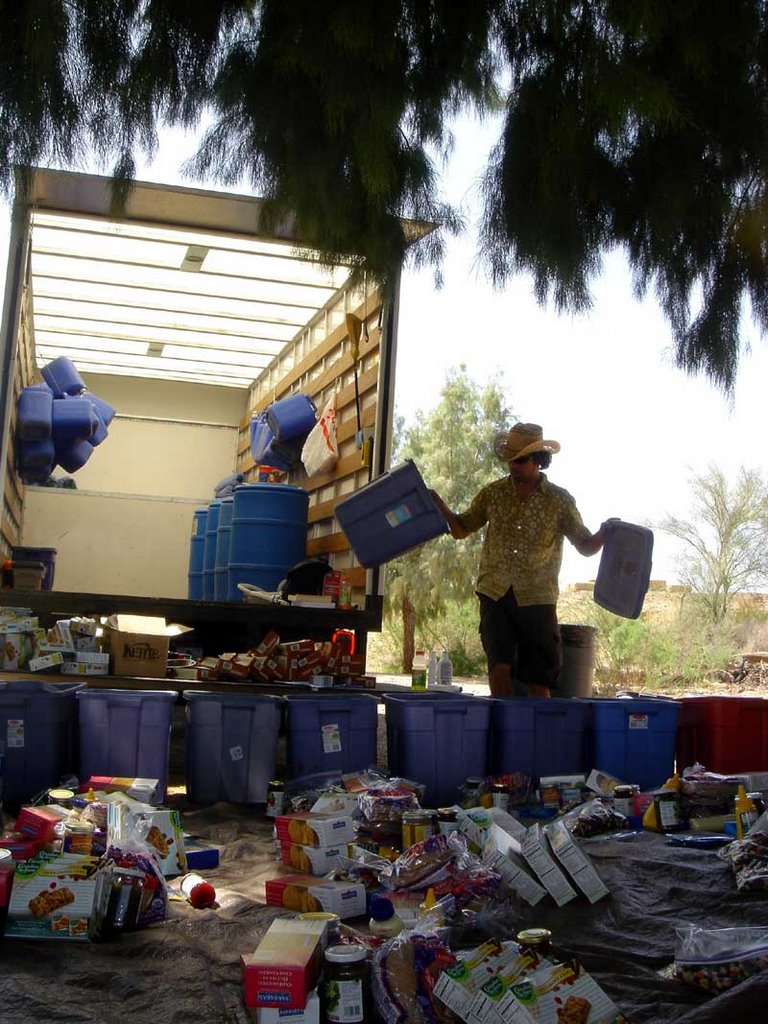
It was a eventful week on the Lower Colorado River with Alok and I running a kitchen out of Walter's Camp for two 70 kid groups. High winds caused many adventures and wild times for the river naturalists but I escape with a drive through a dusty wind storm in my favorite vehicle: the Super Cube truck.
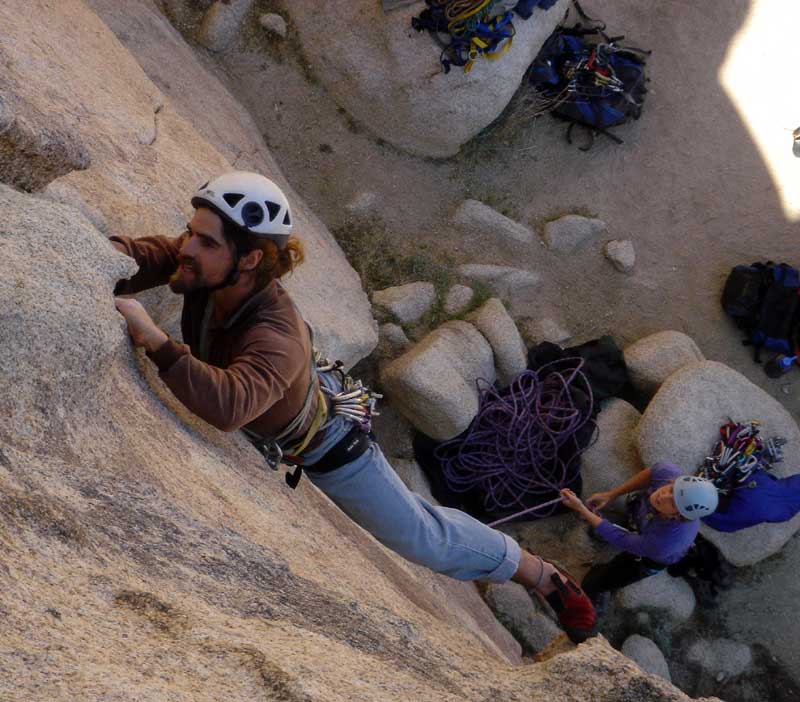
Where did I head with free time on my hands? My home in the Hidden Valley of Joshua Tree of course. We were lucky to get a site and I was lucky to have such great folks to visit with. Fun climbing, great music, tons of NAL roadkill (aka leftover perishable food from program) in a cooler helping the life of the budget naturalist along. Climbing is great these days – the weather is what Joshua Tree dreams are made of. Blooms are just about ready to burst from the desert cactii. More work and play ahead. Life is good!
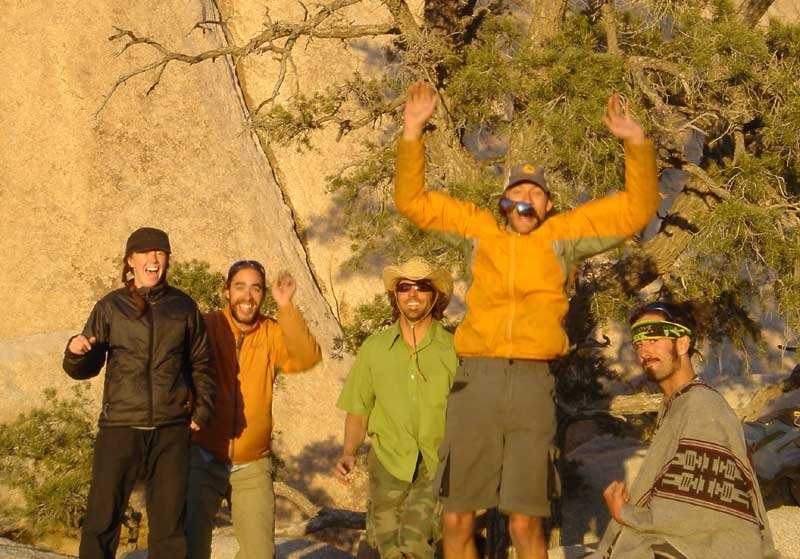
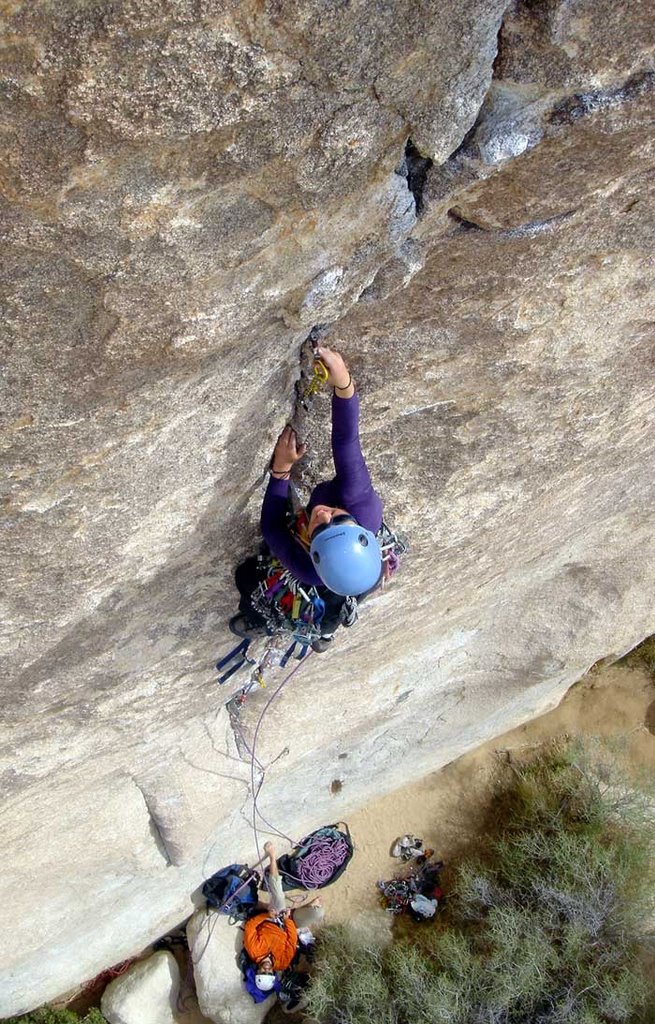
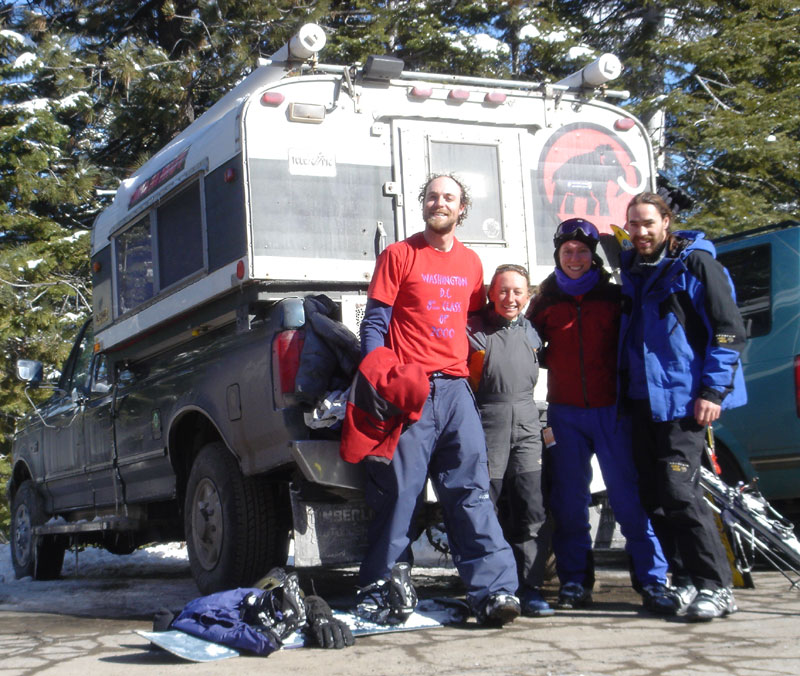
Photos: (upleft) Ian and Michelle 'climbing in the backyard.' Hands Off, Hidden Valley, JTNP. (L) Alok amidst Walter's Camp Kitchen. Colorado River Commissary Support, NAL. (R) Natty family after climbing. Michelle, me, Alok, Rob, and Yes-I.

Desert rock, mmmmm.....
It's amazing how fast time goes when the busy things of life start to compound one upon another. The end of my winter term at Oregon State and the beginning of my spring season of Naturalists-At-Large has left little time for conversing on the Internet. I have two trips behind me at NAL and a big season ahead. And while I'd love to pin my latest posting hiatus on work and sickness, the last week can only be attributed to my immersion in the Joshua Tree climbing life.
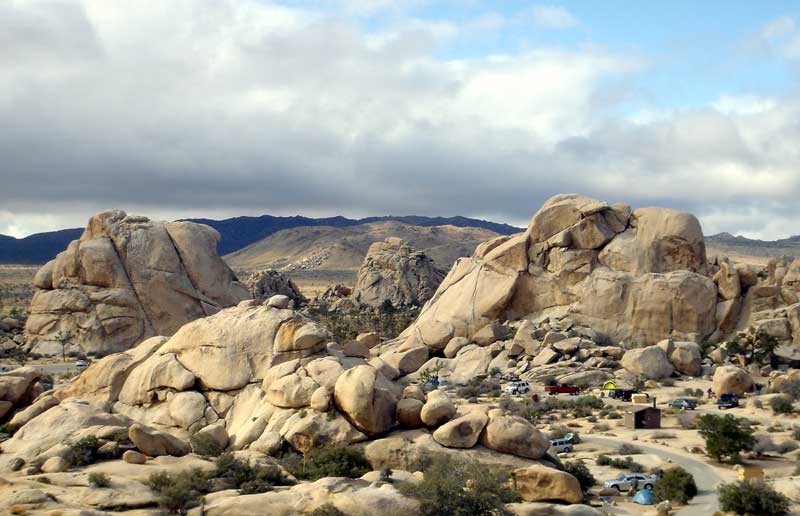
I'm back in Hidden Valley campground. Here again, climbing harsh granite and routes steeped in history. Living in a community of friendly climbers and good people, where its not unlikely that a walk around the 45-site loop will reunite one with at least a handful of long-time seen fellow adventures. For those folks you don't see its time to get an update of their whereabouts from the kind mix of hearsay and gossip past through the informal fireside conversations of fellow educators, climbers, and thoughtful desert-rats.
Once one settles into the Hidden Valley camping life going to town in something that one dreads. A parked car is a beautiful thing and rare treat for me. So when I finally pulled the $1200 Subaru into the spacestation site of Hidden Valley I was content to resign myself to the internetless/phoneless life of desert dwelling. Awe... a short walk in any direction from home will deposit you at another Joshua Tree challenge. Climbing is all-around during the day, friends and fires and music is all-around at night. Bluegrass bands show up with an upright bass, old friends show up with a mission for the Chasm of Doom, food gets shared over a campfire, and the easy life of Jtree is again a part of my life.
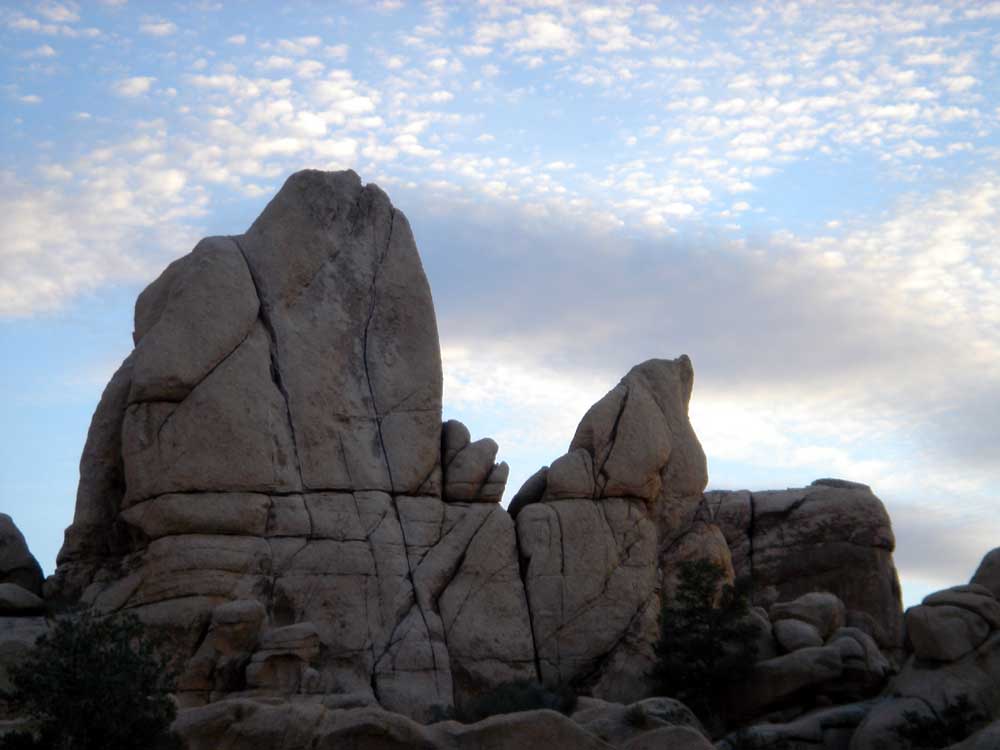
Photos: (L) Sunshine in bigwall training mode on Hot Rocks.
(R) Scotty smiles at the rickety gear and a good stem on M & M's Plain.

The success of the Pit:
or What still makes Bishop rock
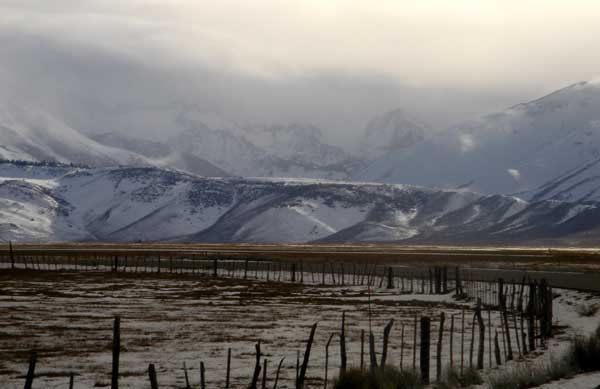
Photo: Mt. Tom (R) and Mt. Basin when I awoke this morning at the edge of the Pit.
We'll I've been pretty much mobile since the beginning of this term, with few problems in connectivity (wireless internet is indeed everywhere). Although I have been consuming my fair share of fuel lately I feel like my lifestyle does indeed exemplify "doing something with less". I am not the only one.
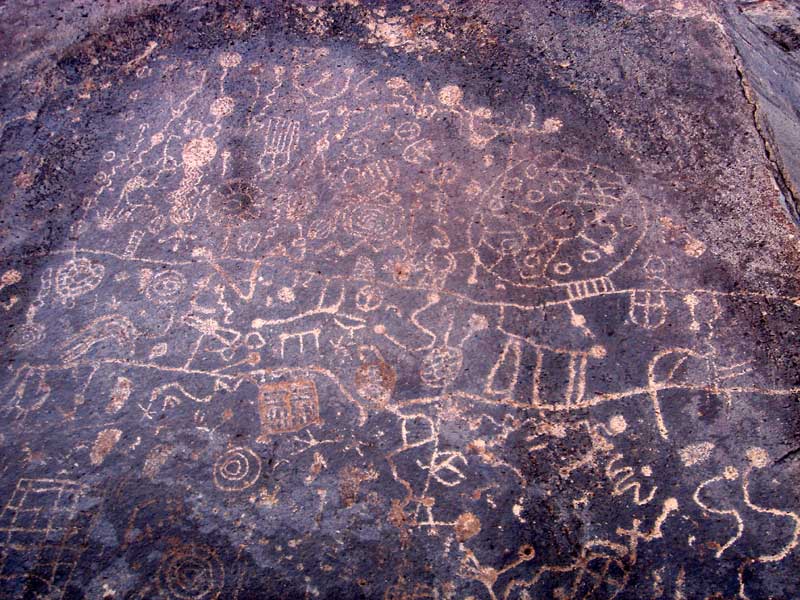
The Pleasant Valley Pit Campground is just outside of Bishop, CA. Pleasant Valley is the valley immediately down from Owen's River Gorge, where the river is/was free to finally meander across the high desert. From the pit's edge the views into the central Sierra are blocked only by the aforementioned powerlines and the striking summit of 14,000+ Mt. Tom is just miles to the west. This campground is something of an anomoly. It was created when the BLM and local climbing access groups saw the need to centralize camping and mitigate impacts on the fragile Tablelands area. The Tablelands is home to 1,000s of boulders of international rock climbing acclaim, though they also contain handfuls of amazing glyph sites and are of course home to many sensitive species.
Anyways, “the Pit” is just that - a pit from an old road building project. Climbers moved in and established trails and sites and basically an informal campground was born. This is when I first discovered it - around maybe 1997. Over the years the BLM has taken a larger part in managing the site. Adding bathrooms and dumpsters and a camp host. The fee is now $2 per vehicle - still a bargain though climbers did just informally manage the place for years. The addition of bathrooms spurred a heated debate at one time, so did the fee. Now a homeostasis has been reached. A 60 day limit has been imposed, very liberal since the FS still limits stays in any one place to 30 days. The camp host runs a recycling program. Now, climber's join Federal managers in trail building and clean-up days. Last fall, during an Access Fund sponsored native grass reseeding work party, I swung a polowski immediately next to the district ranger (in speeches later everyone championed how far up the chain the cooperation had gone).
Local climbers, that now live in town, have built a strong relationship with the FS and BLM, the Access Fund (a rock climber's premier preservation group) has aided locals with counsel and funding to make Bishop one of the most open-access rock climbing regions in the US. Other players like Los Angeles Power and Water and even local landowners have been quick to open discussions with climbers. All resulting in maintaining access and preserving the fragile arid Tablelands.
In our times of pessimistically musing about over-consumption and government inadequacy its good to remember the grassroots successes. Locally born and supported, these successful 'management consortiums' are indeed working. I've seen first-hand the collective preservation of both the ecosystems and the human experiences that are retained within our national natural resources.
First posted on an academic discussion board when I was asked: "How do you post from a campground?"
Other photos: (1)The Suby just above the Sad boulders with the impressive White Mountains in the background. The Pit and the Sierras are directly behind me. (2) Honestly I took this picture in the Tablelands. Looks like Arizona doesn't it. I'm not telling where these are.

Vagabond realities:
Replacing Mountain
Storms with Desert Sun
Time does fly when the snow is falling. Living life from the confines of a Subaru through winter storm after winter storm reduces one's life to what's important: keeping warm, drying gear, eating hot food, driving in nastiness, and skiing pow! That leaves little time to blog on and on about the intricacies of living out there. Though throughout my time chasing snow and free parking in Lake Tahoe I have come across some ' vagabond realities' or 'dirtbagian philosophies' – however you may call them.
First, gas is cheaper than a hotel. At first I felt bad about idling the engine to warm up or (more often) dry gear. Then I did the math. A gallon of gas for an hour of warmth is far cheaper than the price of a hotel in North Lake Tahoe (by about $88.45 in turns out). I also felt some remorse knowing I was consuming another bit of precious Middle Eastern or Alaskan fossil fuel. Again, that only lasted so long as I compared how each of your homes are heated. Besides my friends in the Pacific Northwest (who are blessed with ample hydroelectric power) most homes are heated with natural gas or electricity generated from coal-burning power plants. After many other comparisons my 2.2L gasoline engine started to seem pretty insignificant against the consumptive power of the US heating industry.
Second, a friendly restaurant or coffee shop with Internet access are well worth giving up a few federal loan dollars to. My classroom has become the local coffee shop, complete with local color and caffeinated busyness. But lately, what strikes me the most while sipping chai and debating the rigors of a federally mandated decision making structures is: how many other people are doing the same damn thing. In the Tahoe City coffee shop Syd's, peeking at screens revealed many other students focused in on online university websites near and far- the others are running a small businesses or managing their money or checking their e-mail or buying a car. What it all comes down to is that the Internet is changing everything.
Third, the station wagon is the smallest unit of shelter that can be comfortably managed as a home and living space. I've lived in a Volkswagen van, an Alta dorm room, and the smallest Bellingham studio in the world – all these places easily provided the needed shelter and warmth. The Subaru does little less, though I sometimes have to brave the elements to fire up the stove and cook. It has become so easy to lose sight of what is minimally needed to be comfortable and happy. I'm living proof that it doesn't take much. I will concede that my pricey synthetic wardrobe and bedding, coupled with the miracles of technologies (namely batteries and solid state electronics) make this lifestyle a lot easier. But, more important is the knowledge I will take from this part of my life when making decisions in the future. More space doesn't not equal more happiness.
A nice segue into the forth and last vagabond reality – more work equals more money, but rarely equals more fun, unless your fun is swimming in money like Scrooge McDuck. I can't help but come back to this topic again and again. Work gets in the way of a fulfilling life. People are often so amazed at my schedule (i.e. The last two weeks I have been skiing Tahoe without a care in the world). People are more amazed to hear I'm not family funded (&$%# my car costs $1200). More over, folks that know me well and get a look at my tax forms offer a quizzical look – how.... with an income like that? I say: easy. Refer to steps one thru three.
It's been a while since my Washington birthday week adventures. The time has gone fast this February. I continue to wade through my online classes, though I think I am over the hump and the end is in sight. Many long drives from the north to south took me from the Canadian border to the northern tip of the Sierras. The frozen Eastern Oregon countryside made for an incredibly scenic drive, and the $1200 Suby is performing fine. I arrived in Tahoe just in time, with only partly nasty roads – that evening a regular winter storm hit and dropped a foot and a half of Utah quality snow.
The biggest event recently was the long-awaited President's Weekend Camp Highland Outdoor Science School Reunion. Thanks to the master planning by Ms. Dooley, and the hook-ups by Clay and J. Rose the gathering in Tahoe couldn't have been better. Two days of backcountry skiing started off the weekend. Each night was hot tubs, card games, and cocktails. It was amazing to see everyone back together and I caught up on so many stories.
Monday, Northstar-at-Tahoe was the first in area skiing I've done since Targhee – Clay and I rocked it from open til close, the rest of the CHOSS folks had to make flights Monday evening. Becca's big green vegi-powered truck offered support in the NorthStar parking lot and beyond. Tuesday, of course, I could barely move as my body recovered from the big vertical day. So I settled into Clay's living room to do homework and watch Olympic curling – I know what I'm gonna do when I get old. Which feels like its coming pretty fast sometimes – especially after a weekend of big ski days and late nights.
Today, got one more day of backcountry in. Clay, being the knuckle dragger he is, opted against the traversing and sent Becca and I off to climb from Incline Village by ourselves. The snow was soggy and thick but the views made up for it. Tahoe is truely a playground and I thank Clay Harvey for pointing me in the right direction and putting me in touch with folks that always have the adventure beta.
My climbing partner Andrew wrote up a great report of my last adventure that can be found

Washington Winter Wallowing
Turned back by alpine snows, welcomed by desert sun
It was an eventful weekend in the Northwest for IanOutThere. Thanks to never-ending kindness of the Harvey family I was able to enjoy many adventures around Cle Elum. The rustic Harvey cabin has no running water, but it does have a great wood stove and strategic location, and was a great basecamp for a haphazard collection of weekend excursions. Michelle, recovering from an awful cold, came down from Bellingham carrying much needed gear (avalanche toys and Gore-tex). Andrew came over from Tacoma -the most useful thing he carried was a six-pack of JubelAle.
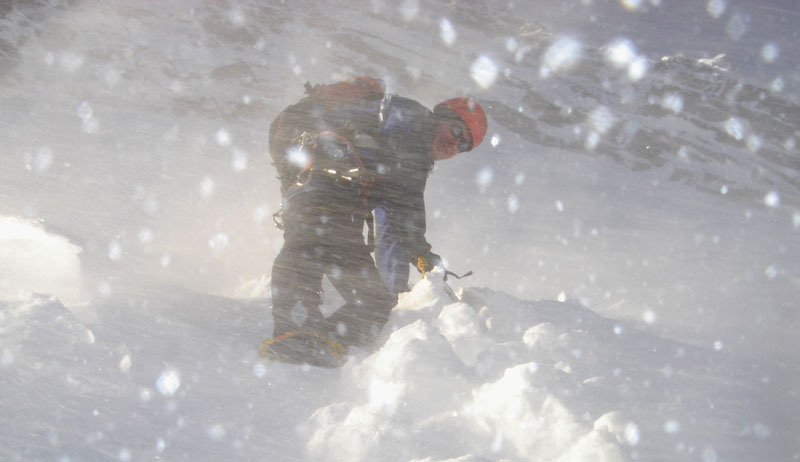
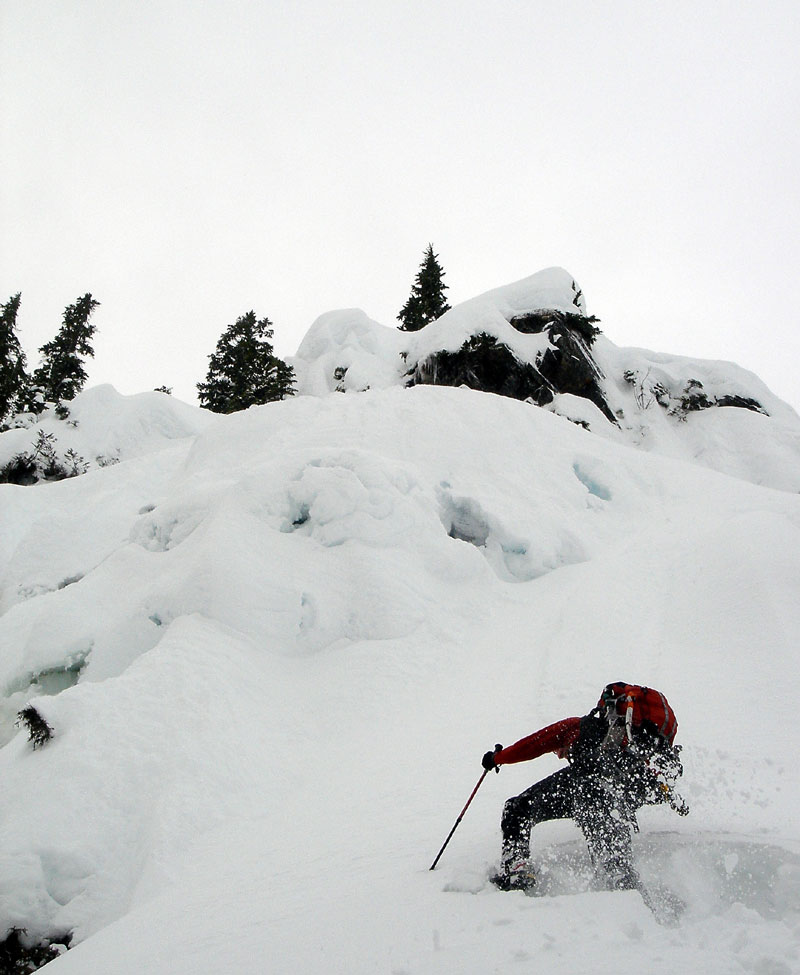
Andrew arrived late Saturday and we packed heavy bags in anticipation of an 'anything can happen' alpine adventure north of Snoqualmie pass. We had every alpine tool known to man, but we were none-the-less turned back by deep, slogging snows and intense avalanche conditions. The weather was in our favor, the route challenging in winter but do-able, a good team – wrong sport. All I could think as we took two steps forward and slid back one and half in our snowshoes: “Should've brought my skis!” Live and learn. The story of this winter for me is right time, wrong gear. You'd think I'd get it spot on by now, but the combination of winter variables will always make 'getting out there' a crap-shoot. Disheartened but not distraught Andrew and I choose the safe route: Scrabble, BBQ, and beers back at Casa de Harvey under cloudless skies.
Andrew left us for the rewarding work on lifeguarding at the YMCA, Michelle talked me into another night at the cabin and a rock climbing day at Vantage (AKA Frenchman's Coulee). I could think of worse things to be talked into. Vantage – what a cool desert climbing getaway. The temperature was damn near perfect and, while I had heard so much about the piss-poor rock quality, the climbing was still super fun and exactly what the doctor ordered. After ticking off a few steep climbs in the sun at the Feathers, we put the gear in the car and hiked out to explore the outer reaches of the Coulee as the sun set. Wide, dry canyons are framed by endless basalt columns, slight waterfalls pour from notches worn in the framework of the rock walls. The mighty Columbia looms just out of sight at the end of each drainage. This is big country.
These are some of the youngest (geologically speaking) rocks in Washington. With such abrupt countryside one can easily think back to the times when raging rivers and mighty ice sheets ruled this land. Now the desert dryness has replace the raging waters, but the ambience in still primevil.
The Sunshine wall is reached by a narrow hidden slot reminiscent of an Indiana Jones movie. It is high and the routes tower above you. As the sun set we walked the base of the deserted area, scoping bolted aretes, one-of-a-kind chimneys, and clean dihedrals. I can't compare the routes I stood below to any other climbing area (again, rumors of poor rock quality abound) but I'm undoubtedly putting the cams in my pack for my next trip to Vantage. See you there!

Definitions of contretemp on the Web:

Canadian Winter Weekend #2 -
Get me out of this country!
Where: Southwestern British Columbia - downtown Vancouver, Whistler, Squamish, Pemberton, St. Agnes Wells Hot Springs, Queen Elizabeth Park
Wait at border: 50 minutes departing, 10 minutes returning
Price for 18 rolls sushi plate: 5.95 CDN$
Who: Ian and Michelle
The rustic and natural hot springs of St. Agnes Well are worth driving 40 miles of muddy Canadian forest roads. When I went to St. Agnes in 1996 they were a bit run-down , though hot and flowing well. Since then the property owners have developed the site it good style. The site now has three perfectly temped tubs and lots of camping along the Lillouet River. It was deserted on the wintery Friday night we camped there, the suggested fee was $5CDN per person, but we made a donation of about $7US. Worth every bit of the long drive. GO!

Here's The Beta -
Elfin Lakes Backcountry Hut at Diamond Head, British Columbia
When the weather outlook is snow, rain, and more snow I start digging through my Internet bookmarks for warm places to sleep out in the woods. Relatively warm winter storms in the Cascades will test even the best tents and Gore-Tex and from past experience I know better than to hike into the abyss hoping to keep dry in my old 3-season Mountain Hardwear. When the satellite shows front after front poised to pound the entire west coast I track down directions to a comfy backcountry hut. In this case a handful of calls to BC Parks and frustrating Internet searching leads me to the Elfin Lakes Hut in southwestern BC. The hut, the ranger on the other side of the international line tells me, sleeps 35, rarely fills up, and has propane amenities. It's a steep 11km into Elfin Lakes and the avalanche safe route is marked with snow poles. The fee of ten Canadian dollars per person per night can be paid in the parking lot.
This is a cool trip! Great mountain scenery, warm shelters, rowdy and fun-loving Canadians, and with enough time, endless backcountry skiing. Ready to go? Here's the beta.
Drive 20 minutes north on the 5 from Bellingham and you're in a different country. Drive another hour and a half to the town of Squamish, British Columbia and you're on a different planet. From Squamish turn right at the small Garibaldi Provincial Park sign pointing to Diamond Head and climb up the logging road that dead-ends at the trail head for Elfin Lakes. The trailhead, rumored to be the one of the most popular winter spots in lower BC, is full of cars; yours is the only one with Washington plates. Pay the fee, top off the packs with more food (yummy baked goods you'll never find in an American supermarket), and skin up the skis. Now work your way slowly up the abandoned road as hordes of local day skiers and groups of snowshoers pass you with their light packs and Canadian superhero strength.
At the midway point you'll find a warming shelter at Red Heather Meadows, then the trail steepens and deposits you on Paul Ridge. The skiable terrain falls away to both sides and the mind numbingly long ridge rolls towards the interior of the range and the remote hut. When you find yourself in a whiteout, at dusk, 10 km into the Canadian Cascades, don't worry (even if two old crotchity Canadian tele skiers just told you 'you might not make it'). Just keep following the marked route and eventually you will be deposited at the hut.
The hut will be nearly full, encampments of tents and snow caves will surround the place. Coming in so late folks will welcome you and point you to the last remaining sleeping spot. If you didn't bring Therma-rests you'll be sleeping on plywood. There's an atmosphere of a adult birthday party, the propane lights and heater make it feel like your in the frontcountry, it's loud, smells like good food being cooked, there's lots of folks to share stories with, everyone is boisterous and has a funny Canadian accent. The stovetops and few pots are being used, but your tiredness makes you content with eating cold things wrapped in a tortilla. Talk and smoke with the locals. Sleep.
In the morning the clouds will riseto reveal the entirety of the mounatinscape the engulfs the hut. You'd need 5 days rather than 2 to explore the untracked snow that surrounds you. But it's already time to reverse your approach route. In the time it takes to load your pack the snow will return and you will step out of the hut door into the familiar whiteout. Follow the orange poles, get some turns in above the meadow, take your skins off, it takes no time at all to descend the wide trail to the car. Before reaching the US border start dreaming and planning a week-long ski trip to Elfin Lakes. Commit to memory the sunlit hinterland mountaintop that pushed away the dark clouds to beg for a few turns.
Bringin' in the New Year Redneck Style - Fossil fueled trips to Newberry Crater NM and Crater Lake NP
What better way to bring in the New Year than to burn some fossil fuels, fill your tummy with food and drinks, and spend times with good friends. During my last three day adventure, slednecking and RVing once again proved themselves a worthy endeavor in rainy and otherwise inhospitable Central Oregon. I must note: during the pre-trip preparations the goal is always snowmobiling, but once we arrived at 10-Mile SnoPark below Pualina Lake snowmobiling was oftentimes the last thing on the list.
As always, getting a trip like this together takes a lot of prior organization. Josh Harvey, AKA The Captian, was, per usual, instrumental in putting everything together. Josh made reservations for the Diamond Lake cabin, acquired a four-place sled trailer, loaded the motorhome, fueled and maintained the beasts, and gathered the raggedy human team at his SE Bend home to plan for the weekend. Michelle came all the way down from Spokane to join the revelry and I abandoned any hope of finding gainful employment in Bend. With Josh as our crew boss we mixed a few beers with trailering the sleds, finding helmets, buying supplies, checking the weather, etc. Rain and slushy snow had been the norm in Bend for the last week and we crossed our fingers that we would gain ground on the snow level by heading south and up into the caldera at Newberry Crater National Monument.
In a modern caravan of Ford and Toyota trucks, trailers loaded with sleds, and an old-school Itasca motorhome we crawled our way down Hwy 97 through slush and heavy rain and up into the already nearly full 10-Mile SnoPark. The huge lot was already loaded with motorhomes (ranging from our thrifty Itasca to million dollar coaches) full of revelers leaving the confines of the electrically driven city for the free-wheeling, two-stroke driven encampment just miles below Paulina Lake's New Year's celebration. When we arrived we where lucky in finding space sufficient to park the caravan. We got to work preparing and beautifying base camp I.
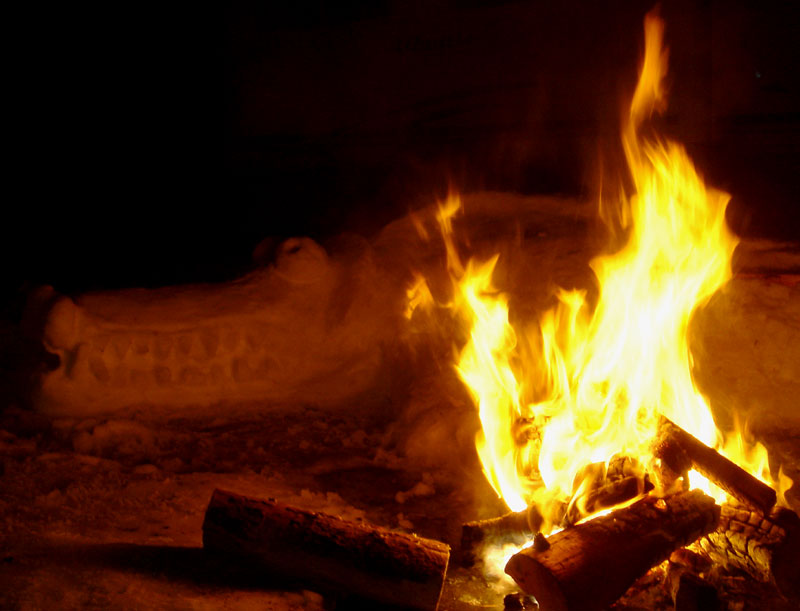
Fire- check; unload the sleds- check; beverages stored in snow- check; get the generator going- check; bake the pizza- check; music- check; large serpent-like snow sculpture that rings the campfire, provides warm seating, and gathers empty beer cans- check!
Without going into details, our time spent at camp was a blast. Tyler Scrivens and I put hours into creating our icy friend Carl from piles of snow that began as simple seats, Josh lit off some bottle rockets, we played rounds and rounds of the dice game 10,000 (a Farquhar family favorite), Kate challenged us all to our favorite PlayStation game, Michelle mixed drinks and kept me laughing all night, and Scotty's introduction to sledneck-land reminded me of my own. Of course we also buzzed around on Josh's handful of snowmobiles in the rain and snow. Just before 11pm we made our way slowly up the oversnow road 5 miles to the bonfire built from whole trees and the fireworks display at Paulina Lake Lodge. Josh had a slight collision with some jack-ass on a dirt bike, our progression was slowed, but we pushed on to bring in the New Year on the shore of the mighty volcanic lake warmed by dozens of salvaged lodgepole pines.
New Years' was barely the middle point of the long weekend. The next morning we sent the motor home back to Bend (thanks Kris) and headed down to Diamond Lake Resort to install base camp II. From the comfy cabin at the shore of Cascade ringed Diamond Lake we would have easy access to the bar, and, be just down the road from the north entrance of Crater Lake National Park. Since Josh fell asleep at about 9pm, we would have a motivator the next morning as we prepared to buzz out the 10 miles to the north rim of Crater Lake. Getting to the remote rim of this often overlooked national park is truly an oversnow journey and the only way to make a day trip out of it is at about 45 MPH. The well-marked route is the only path into the park via snowmobile. The fine for leaving the groomed route in $5,000, impoundment of your sled, and loss of your driver's license for a year. We stayed on the trail. When we reached the rim we killed the sleds and headed to the highest point of the snowy headland and watched Wizard Island peak from the clouds. The lakeside cliffs looked huge and magnificent blanketed in the heavy winter snows. The water, through 1000's of feet below, still felt bitter cold and angry. Crater Lake on January 2nd is truly a treat.
A tour of Oregon's volcanic era calderas, fully supported by Harvey and his amazing combustion engines, fed with good food and drink, and in the presence of good friends is an adventure fit for the date. What can I say: I spent the end of 05 and the beginning of 06 drinkin' beer and using fuel. Hopefully not too different that most of you. Happy New Year to all and especially to all the friends also on the Pro Leisure Tour. The PLT lives on.
Photos: 5/7th of the crew - Harvey-time, Scrivs, me, Kate, and Michelle